
Front is the transition zone between air masses with distinctly different properties.
The differences in density are most often caused by temperature differences. Separate air masses with different humidities as well. We identify fronts by the movement of this transition zone and the properties that move over a geographical location.
How do you identify a front on a surface weather map or by your own weather observations? Look for:
- Sharp temperature changes over a relatively short distance
- Change in moisture content
- Rapid shifts in wind direction
- Pressure changes
- Clouds and precipitation patterns
Types of Fronts:
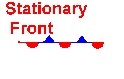 A stationary front is characterized by no movement of the transition zone between two air masses.
Leave a Comment